Restaurant Equipment Financing: Options for Food Service
Restaurant Equipment Financing: Options for Food Service Businesses
Opening a restaurant or upgrading an existing kitchen requires serious capital. Commercial-grade ovens, walk-in coolers, ventilation systems, and POS setups can easily run into tens of thousands of dollars — and that is before you factor in furniture, fixtures, and food prep stations.
Most food service business owners cannot cover these costs out of pocket, and that is completely normal. Restaurant equipment financing exists to bridge the gap between what you need and what your cash reserves allow. Understanding the options available to you — and the trade-offs of each — is the first step toward making a smart funding decision.
This guide breaks down the most common restaurant equipment financing paths, what lenders typically look for, and how to position your application for the strongest possible outcome.
Why Restaurant Equipment Financing Matters
Commercial kitchen equipment is expensive. A single commercial oven can cost anywhere from a few thousand dollars to well over $20,000, depending on type and capacity. Walk-in refrigeration units, commercial dishwashers, exhaust hoods, and grease traps add up fast. Even a modest restaurant buildout can require $
Paying cash for all of that equipment at once would drain most operators' reserves, leaving little room for the unexpected expenses that inevitably come with running a food service business. Restaurant equipment financing allows you to spread those costs over time, preserving working capital for payroll, inventory, marketing, and day-to-day operations.
Beyond cash flow management, financing can also give you access to higher-quality equipment than you might otherwise afford. Better equipment can improve efficiency, reduce energy costs, and help you serve customers faster — all of which contribute to your bottom line.
Common Types of Restaurant Equipment That Qualify
Most lenders and leasing companies will finance a broad range of commercial kitchen and food service equipment. Here are the categories that typically qualify:
- Cooking equipment — ovens, ranges, fryers, grills, steamers, broilers
- Refrigeration — walk-in coolers, walk-in freezers, reach-in refrigerators, prep refrigeration
- Ventilation and HVAC — exhaust hoods, makeup air units, HVAC systems
- Food preparation — prep tables, mixers, slicers, food processors
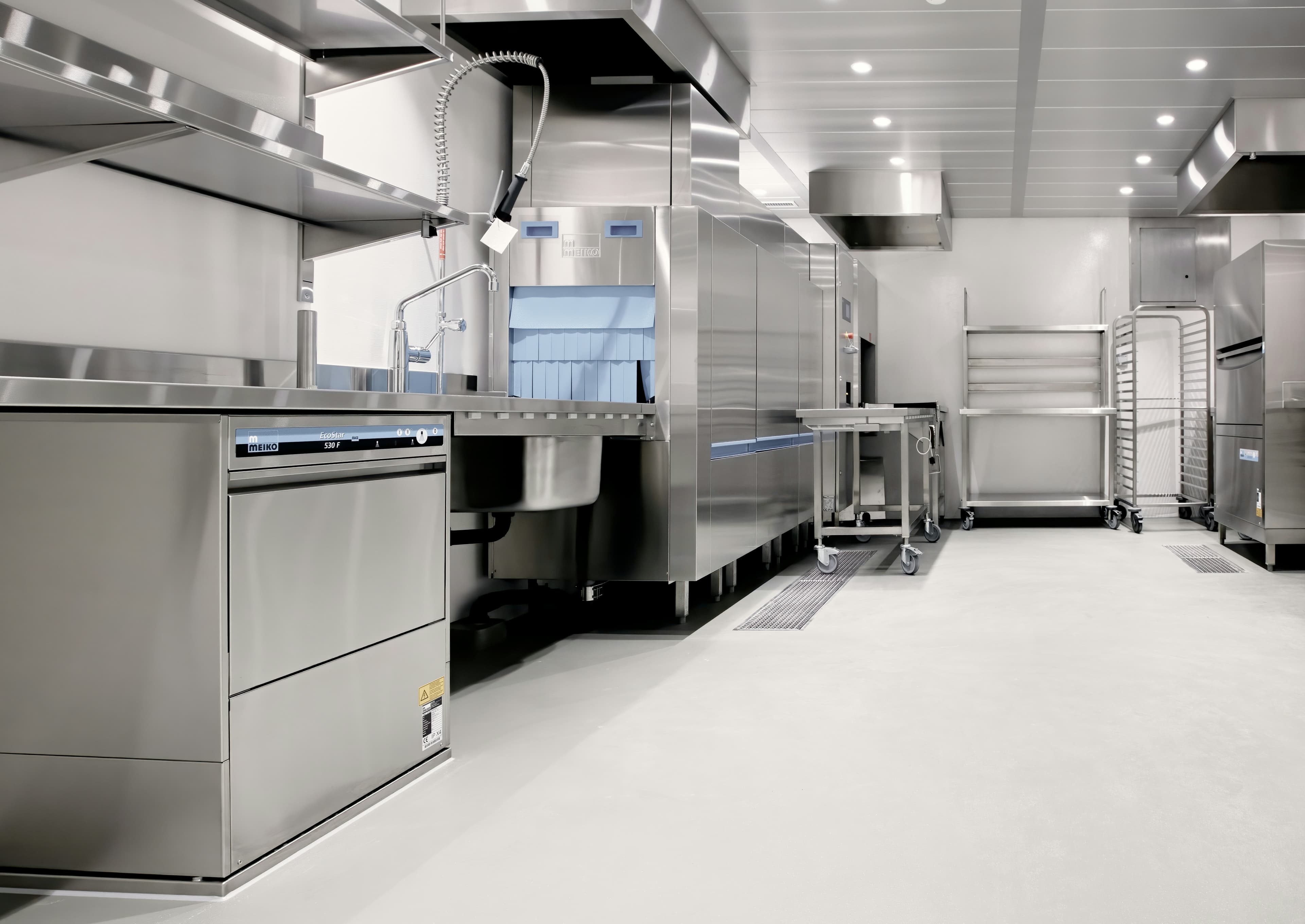
- Dishwashing and sanitation — commercial dishwashers, three-compartment sinks, sanitizing stations
- POS and technology — point-of-sale systems, kitchen display systems, digital ordering hardware
- Furniture and fixtures — booths, tables, chairs, bar equipment, display cases
The specific items that qualify will depend on the lender and the financing program. Generally, if it is a tangible asset used in your food service operations, there is a good chance it can be financed.
Restaurant Equipment Financing Options Explained
There is no single "right" way to finance restaurant equipment. The path that makes sense for your business depends on your financial situation, how long you plan to use the equipment, and whether ownership matters to you. Here are the main options.
Equipment Loans
An equipment loan is one of the most straightforward ways to finance commercial kitchen equipment. The way it works is simple: a lender provides funding to purchase specific equipment, and the equipment itself serves as collateral for the loan.
You repay the loan in fixed installments over a set term, typically ranging from three to ten years. Once the loan is paid off, you own the equipment outright.
Equipment loans can work well for items with a long useful life — things like walk-in coolers, commercial ovens, or exhaust systems that you will use for years. Because the equipment secures the loan, some lenders may offer more favorable terms compared to unsecured financing.
Keep in mind that rates, terms, and qualification requirements vary significantly from lender to lender. Explore your equipment financing options to see what may be available for your situation.
Equipment Leasing
Leasing is another common path for restaurant owners, especially those who want to minimize upfront costs or plan to upgrade equipment regularly.
There are two main types of restaurant equipment lease arrangements:
- Operating lease — You use the equipment for a set period and return it at the end of the lease. This is similar to renting. You never own the equipment, but your monthly payments may be lower.
- Capital lease (finance lease) — Structured more like a loan, this type of lease typically includes a purchase option at the end of the term. You may be able to buy the equipment for a nominal amount when the lease expires.
Leasing can be attractive if you want to avoid a large down payment or if the equipment in question becomes outdated quickly (POS systems and certain technology, for example). The downside is that you may pay more over the total life of the lease compared to buying, and you do not build equity in the equipment unless you exercise a purchase option.
SBA Loans for Restaurant Equipment
Small Business Administration loan programs can also be used to purchase restaurant equipment. Two programs are particularly relevant:
- SBA 7(a) loans — The most versatile SBA program, 7(a) loans can be used for equipment purchases along with other business purposes. They typically offer longer repayment terms and may come with competitive rates, though the application process tends to be more involved. Learn more about SBA 7(a) loans and how they work.
- SBA 504 loans — These are designed for major fixed-asset purchases, including equipment. They are typically used for larger projects and involve a partnership between a lender and a Certified Development Company (CDC).
SBA loans can be a strong option for established restaurants with solid financials, but they generally require more documentation and longer processing times than conventional equipment loans.
Lines of Credit and Working Capital Options
For smaller equipment purchases or incremental upgrades, a business line of credit or working capital loans may be practical alternatives.
A line of credit gives you access to a revolving pool of funds that you can draw from as needed. If you need to replace a mixer this month and upgrade your POS system next quarter, a line of credit provides flexibility without requiring separate loan applications for each purchase.
Working capital financing is generally designed for shorter-term needs and may come with shorter repayment periods. It can be useful for covering smaller equipment costs or bridging cash flow gaps during a buildout.
These options are typically not the most cost-effective choice for large equipment purchases, but they can fill important gaps.
Leasing vs. Buying: Which Is Right for Your Restaurant?
This is one of the most common questions restaurant owners face. Here is a side-by-side comparison of the key factors:
| Factor | Buying (Loan) | Leasing |
|---|---|---|
| Ownership | You own the equipment after payoff | You return it or buy at lease end |
| Upfront cost | May require a down payment | Often lower upfront costs |
| Monthly payments | Fixed; builds equity | May be lower but no equity |
| Total cost over time | Typically lower overall | May be higher due to lease fees |
| Tax benefits | May qualify for Section 179 deduction | Lease payments may be deductible as operating expenses |
| Flexibility to upgrade | Harder; you own the asset | Easier; return and lease new equipment |
| Equipment obsolescence | Risk stays with you | Risk shifts to the lessor |
If you are purchasing equipment with a long useful life and you want to build equity, buying often makes more sense. If you need flexibility, want to conserve cash, or the equipment is likely to become outdated within a few years, leasing may be the better path.
Regarding tax benefits: Section 179 of the tax code may allow you to deduct the full purchase price of qualifying equipment in the year it is placed in service. Lease payments may also be deductible as a business expense. Consult a qualified tax professional to understand how these provisions apply to your specific situation.
What Lenders Typically Look For
Qualification requirements vary by lender and financing type, but here are the factors that most lenders evaluate when reviewing a food service equipment loan application:
- Credit score — Both personal and business credit may be considered. Higher scores generally open the door to more options, but some lenders work with borrowers across a range of credit profiles.
- Time in business — Established restaurants with a track record may have an easier time qualifying. Startups can still find options, though they may face additional requirements.
- Revenue — Lenders want to see that your business generates enough income to support loan payments. Be prepared to share recent financial statements or tax returns.
- Down payment — Some lenders require a down payment, often in the range of 10% to 20% of the equipment cost. Others may offer financing with little or no money down, depending on your qualifications.
- Business plan — If you are a startup or pre-revenue restaurant, a solid business plan can help demonstrate your ability to repay.
- Equipment details — Lenders will want to know exactly what you are purchasing, from whom, and at what cost. Having vendor quotes ready speeds up the process.
Requirements differ from one lender to the next, so it is worth comparing multiple options before committing.
How to Apply for Restaurant Equipment Financing
The application process is more straightforward than many restaurant owners expect. Here is a general step-by-step approach:
- Identify the equipment you need. Create a detailed list of every item you plan to finance. Get written quotes from vendors or suppliers.
- Gather your financial documents. This typically includes business tax returns, bank statements, a profit and loss statement, and a balance sheet. Startups should prepare a business plan with financial projections.
- Compare financing options. Do not settle on the first offer you receive. Look at term loans, equipment-specific financing, leases, and SBA programs to find the structure that fits your situation.
- Submit your application. Bread Route connects food service business owners with multiple lenders through a single marketplace. Rather than applying one lender at a time, you can compare options in one place. Apply for Business Financing to get started.
Tips to Strengthen Your Application
Before you apply, a little preparation can go a long way. Here are practical steps to put your application in the strongest position:
- Clean up your bookkeeping. Lenders review your financials closely. Make sure your books are accurate, up to date, and organized. Discrepancies raise red flags.
- Get detailed vendor quotes. Provide itemized quotes for every piece of equipment you want to finance. Lenders need to know exactly what they are funding.
- Check your credit reports. Review both personal and business credit reports before applying. Dispute any errors and address outstanding issues if possible.
- Consider offering a down payment. Even if it is not required, putting money down can reduce your total financing cost and may improve your terms.
- Separate personal and business finances. If you have not already, open a dedicated business bank account and keep business expenses separate from personal ones.
- Be realistic about what you need. Financing more equipment than necessary increases your debt burden. Prioritize the essentials and phase in upgrades as your revenue grows.
Also, do not overlook insurance. Once you have expensive equipment in your kitchen, protecting it matters. General liability insurance and commercial property coverage are worth considering as part of your overall risk management strategy.
Find the Right Financing for Your Restaurant
Funding commercial kitchen equipment does not have to be overwhelming. Whether you are opening your first restaurant, expanding to a second location, or upgrading aging equipment, there are financing paths designed for food service businesses.
Bread Route is a marketplace that helps restaurant owners and food service entrepreneurs compare lender options — all in one place. We connect you with lenders; you choose the option that fits your business.
Ready to explore your options? Apply for Business Financing or Browse Lenders to see what is available for your restaurant.
This article provides general information and should not be considered financial or insurance advice. Financing terms, rates, and qualification requirements vary by lender. Tax-related information is for general educational purposes — consult a qualified tax professional for guidance specific to your business.
Frequently Asked Questions
Restaurant equipment financing allows you to purchase or lease commercial kitchen equipment by spreading the cost over time. With a loan, the equipment typically serves as collateral, and you repay in fixed installments until you own it outright. With a lease, you make regular payments for the right to use the equipment during the lease term.
Yes, new restaurants can qualify, though the options and terms may differ from those available to established businesses. Startups may need to provide a detailed business plan, a personal guarantee, or a larger down payment. Some lenders specialize in working with newer businesses.
It depends on your situation. Buying makes sense when you want long-term ownership and the equipment has a long useful life. Leasing can be a better fit if you want lower upfront costs, plan to upgrade frequently, or prefer not to tie up capital. Consider your cash flow, tax situation, and how quickly the equipment may become outdated.
Credit score requirements vary by lender. Some lenders work with borrowers who have credit scores in the mid-600s, while others may require higher scores for their most competitive terms. Checking your credit before you apply gives you a clearer picture of where you stand.
Down payment requirements depend on the lender and your financial profile. Some programs require 10% to 20% down, while others may offer financing with minimal or no down payment for well-qualified borrowers. Offering a down payment can reduce your total cost and may improve your terms.
Most tangible equipment used in food service operations can be financed. This includes ovens, refrigerators, freezers, fryers, dishwashers, ventilation systems, POS systems, food prep equipment, and furniture or fixtures. Specific eligibility depends on the lender and the financing program.
Repayment terms for equipment loans generally range from three to ten years, depending on the type and expected useful life of the equipment. SBA loans may offer longer terms. The term length affects both your monthly payment and the total cost of financing.
Many lenders do finance used restaurant equipment, though the terms may differ from new equipment financing. The equipment's age, condition, and remaining useful life are factors lenders consider. Having an appraisal or detailed condition report can help support your application.